カテゴリー
2 小泉八雲(ラフカディオ・ハーン) 2-3 小泉八雲の生涯

ラフカディオ・ハーン漂泊の軌跡 -ヨーロッパからアメリカへ-

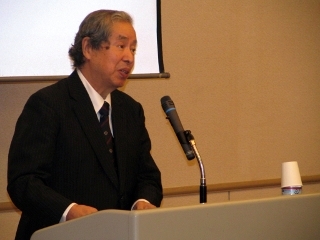
 2009年11月7日14時から、熊本大学くすの木会館レセプションルームにて、「ラフカディオ・ハーン漂泊の軌跡 -ヨーロッパからアメリカへ-」と題し、ヨーロッパ時代とアメリカ時代のハーンについて、基調講演とシンポジウムが開催されました。
 熊本大学学長の谷口功氏より開会のご挨拶があり、続いて司会の中村青史氏がハーンの孫にあたる稲垣明男氏(*注1)をご紹介され、基調講演「ヨーロッパ時代のハーン -ハーン実母の墓標とその子孫を訪ねて-」をお話ししていただきました。
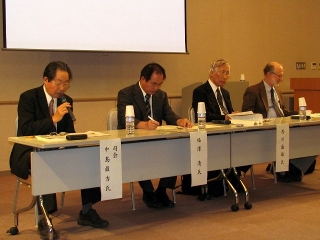
 シンポジウムでは、パネリストに教授の福澤清氏、客員教授・名誉教授の西川盛雄氏、准教授のアラン・ローゼン氏、司会に中島最吉氏をむかえ、「アメリカ時代のハーン」をシンシナティ時代、ニューオーリンズ・マルティニーク時代、ニューヨーク・フィラデルフィア時代に分けてお話を頂戴し、会場からのご質問にもお答えいただきました。
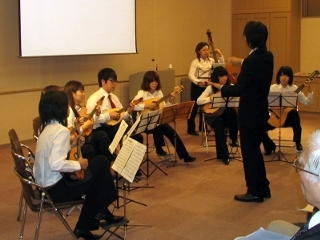
 また、熊本大学マンドリンクラブによる「ロンドンデリーの歌」「フォスター・ラプソディー」の演奏もあり、拍手喝采を浴びていました。

 (*注1)ハーンの次男稲垣巌氏の長男にあたります

基調講演中の稲垣明男氏
基調講演中の稲垣明男氏
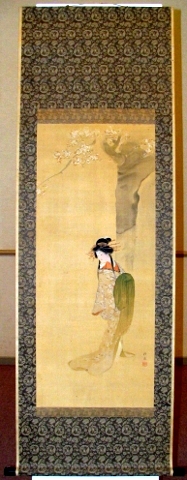
掛け軸 女性の足がない!?
掛け軸 女性の足がない!?
シンポジウムの様子
シンポジウムの様子
熊本大学マンドリンクラブの演奏
熊本大学マンドリンクラブの演奏

  熊本アイルランド協会事務局

カテゴリー
1 お知らせ 1-1 イベントのお知らせ

市民講座「ラフカディオ・ハーンと移民」開講のお知らせ(終了)

本講座は終了しました。本講座の記事はこちらをご覧ください。

「ラフカディオ・ハーンと移民」と題し、西川盛雄氏による市民講座を開講いたします。受講申し込みは不要ですので、お気軽にお越しください。

日時:2009年11月14日(土)14時~15時30分
場所:小泉八雲熊本旧居 (熊本市安政町2-6 鶴屋百貨店裏)
講師:西川盛雄氏(熊本大学名誉教授)
講座:「ラフカディオ・ハーンと移民」
申込:不要ですので、お気軽にお越しください
受講料:受講料は無料ですが、旧居入場料(高校生以上200円、小・中学生100円)のみご負担願います
お問い合わせ:当協会事務局 096-366-5151

熊本アイルランド協会事務局

カテゴリー
2 小泉八雲(ラフカディオ・ハーン) 2-2 小泉八雲の作品

ハーンが書かなかった作品(Lafcadio Hearn’s Unwritten Works)

アラン・ローゼン(Alan Rosen)(熊本大学准教授)

2009年(第11期)市民講座「ラフカディオ・ハーンとアイルランド文化」(5回シリーズの第4回)

熊本大学五高記念館

本講座を音声(mp3)でお聴きになれます。 


IN THE UNITED STATES
1. Collection of musical legends.
“I have been thinking that we might some day, together, work up a charming collection of musical legends: each legend followed by a specimen-melody, with learned discussion by H. Edward Krehbiel. But that will be for the days when we shall be ‘well-known and highly esteemed authors.’” (New Orleans 1883)

2. Financial novel.
The houses eleven stories high, that seem trying to climb into the moon, -the tremendous streets and roads, -the cascading thunder of the awful torrent of life, the sense of wealth-force and mind-power that oppresses the stranger here, -all these form so colossal a contrast with the inert and warmly colored Southern life that I know not how to express my impression. I can only think that I have found superb material for a future story, in which the influence of New York on a Southern mind may be described. … (Letters from the Raven 85-6; my emphasis)
But he eventually gave up this idea. Why?
But in such great cities [New York, London] I do not think a literary man can write any literature. …. Society withers him up–unless he have been born into the manner of it; and the complexities of the vast life about him he never could learn. Fancy a good romance about Wall Street-so written that the public could understand it! There is. of course, a tremendous romance there; but only a financier can really know the machinely, and his knowledge is technical. (XIV 292-93; my emphasis)

3. Medical novel.
Apropos of a medical novel, again-have you had occasion to remark the fact that among the French, every startling discovery in medicine or those sciences akin to medicine, is almost immediately popularized by a capital story? (XIV 22)
 I don’t like your plot for a medical novel at all. It involves ugliness…. Then your plot is too thin. It has not the beauty nor depth of that simple narrative about a famous painter, or writer-I forget which-whose imagination rendered it impossible for him to complete his medical studies…. He had to abandon medicine for art. A very powerful short sketch might be made of this fact.
 I believe in a medical novel-a wonderful medical novel. We must chat about it. Why not use a fantastic element-anticipate discoveries hoped for-anticipate them so powerfully as to make the reader believe you are enunciating realities? (XIV 62-63)


IN JAPAN
1. Article on drinking sake.
I have become what they call a jogo-and find that a love of sake creates a total change in all one’s eating habits and tastes. All the sweet things the geko likes. I cannot bear when taking sake. By the way, what a huge world of etiquette, art, taste, custom, has been developed by sake. An article upon sake-its social rules-its vessels-its physiologlcal effects-in short the whole romance and charm of a Japanese banquet, ought to be written by somebody. I hope to write one some day, but I am still learning. (XIV 160)

2. Article on words.
You recommend me to write an article on words some day. I would like to – from my own limited point of knowledge only; ignorance of philology would here be a great drawback. But it would be infinitely painful, laborious work. Because really the art of placing words is with most of us instinctive. It would be analyzing one’s own sensations and tendencies of imagination; it would be nearly as hard as to write another “Alice in Wonderland.” (XV 441-42)

3. Book on Japanese folklore.
“Professor Chamberlain and I have a secret project in hand-a book on Japanese folk-lore.” (Ellwood Hendrick, July 1893, XIV 236)

4. Article on the disappearance of the gods.
There are no ghosts, no angels and demons and gods: all are dead. The world of electricity, steam, mathematics, is blank and cold and void. No man can even write about it. Who can find a speck of romance in it? … The Protestant world has become bald and cold as a meeting-house. The ghosts are gone. Sometimes I think of writing a paper to be called “The Vanishing of the Gods.” (Chamberlain, December 1893, XVI 84)

5. Article on Japan’s “open ports.”
Coming out of my solitude of nearly five years to stand on the deck of the Kobe Maru on the 10th, I felt afraid, I saw myself again among giants. Everything seemed huge, full of force, dignity, massive potentialities divined but vaguely. A sudden sense of the meaning of that civilization I had been so long decrying and arguing against … came upon me crushingly. … How small suddenly my little Japan became!-how lonesome! What a joy to feel the West! (Yokohama, 15 July 1894, to Chamberlain, reprinted in Allen, 277)
I have received from the gods inspiration for a paper-the Romance of the Open Ports-or, perhaps, the morality of the open ports. … I could startle the world with a paper on the ideas that came to me the other day.
… In the brief time since I got on the Kobe Maru I have learned so many astonishing things … . My imaginary hard-fisted and cold-hearted businessmen of the colonies vanish away-phantoms only; and in their places what warm human realities appear! Really there is a vast romance to be written here in a few words-with help of thoughts and illustrations from evolutional philosophy. Really, I must try later to get into this exiled Western life, and love it, and study it, and tell all the beautiful things there are in it … . (Tokyo, 17 July 1894 to Chamberlain, reprinted in Allen. 278)

6. Article on Japanese drama.
Father used to express his desire to write on Japanese ‘No’ (a type of drama) and the theatre. At the time when Dr. Tsubouchi was praising ‘Ten-no-Amishima’ of Chikamatsu, father was asked about translating them, with the view to introducing them to foreign countries. But the plot of the story, where a man leaves his wife and child to elope with another woman, was against his belief, so he declined to undertake it (Father and I, 10)

7. Article on inter-racial marriage.
Father, one day, remarked to mother about the bad results from marriage of close relatives. But inter-racial marriage produced bad results too, he thought He was thinking of writing on the subject to a foreign paper. When he consulted his wife, she replied. ‘You are a product of inter-racial marriage-but are you a poor product?’ He replied, ‘At times I think I am a very poor result, almost a waste. This is a result of a very distant inter-racial marriage, I think. So, I just thought that I would write about.’ ‘But,’ mother said, ‘you write about such a thing, but you and I are two different races and what about our children? Is it right to acclaim to the world the poor product of such a marriage?’ He said to her, ‘Do you think so?’ and he tore up his manuscript. I think of that manuscript now and imagine all sorts of things. (Father and I, 13)

There is abundant proof, alike furnished by the intermarriages of human races and by the interbreeding of animals, that when the varieties mingled diverge beyond a certain slight degree the result is inevitably a bad one in the long run. . . . -there arise an incalculable mixture of traits, and what may be called a chaotic constitution. (Letter from Herbert Spencer to Baron Kaneko Kentaro, August 1892, XII 461)

カテゴリー
2 小泉八雲(ラフカディオ・ハーン) 2-1 小泉八雲の魅力

ハーンとのかかわり

樋口欣一(まるぶん書店顧問)
2006年10月22日(日時は調査中です)

はじめに
 私とハーンとのかかわりについてはハーン来熊百年記念祭報告書にありますように1988(昭和63)年4月、ハーン研究会を立ち上げた頃より始まりました。そのきっかけは、ある東京の出版社の社長さんの耳の痛い忠告でした。

実はその4年前に「ラフカディオ・ハーン著作集」の第15巻が発行されました時に、その翻訳に当たられた早稲田大学の先生を呼んで熊本で講演会を開催しましたのでかれこれ22年以前になります。先程の出版社の社長さんの忠告で、熊大の中島先生や中村先生に相談して勉強会を始めてのが昭和63年の事でした。
 
私は去年4月にも熊本八雲会でお話ししましたので(*注1)、今日はハーン来熊百年記念事業行事で熊本へ見えた先生の中でひょんな事で知り合いになった方々の内から3名の方とのお話をさせて頂きたいと思います。

洋学校の市原
 朝そと庭の掃き掃除していますとジェーンズ邸の前を行きつ戻りつしておられる方がいます。「どうされましたか」と声を掛けると「ジェーンズ邸を見学に来たが開館していないので・・・」と言われるので「まだ30分もあるので、私の所でお待ちになって」と言って迎え入れました。すると丹沢栄一と言われる東京の大学の先生で“ハーン”の勉強で来たと仰るので、ハーンと熊本のこと、ジェーンズの事など暫く話して、ジェーンズ邸へ送りました。これが機縁でハーンの資料や研究論文を次々に送って頂くようになりました。
 ジェーンズにつきましてはノートヘルファー先生著「アメリカのサムライ」という本がありますが、その中に市原盛宏と武正とを混同した記述があります。盛宏は京都の同志社に進んでいますが市原武正は東京の商法講習所に進んでいます。実は洋学校への入学は武正の方が早く、後進生教授方となっています。この事を丹沢先生に申し上げると間もなく早稲田大学の図書館でジェーンズの死去に伴う香奠奉納者名簿に二人の名前が出ていて、当時日銀名古屋支店長の盛宏は武正の5倍以上の香典を納めており、この点で「アメリカのサムライ」の訂正が必要と判りました。一方、武正は商法講習所を卒業したと云う記録はありません。英語が出来ましたので外国へ出たのかと渡航記録を調べましたし、一橋大学も調べましたが杳として掴めません。武正は花岡山の熊本バンドには参加していない所から阿蘇の市原家と関係ないか調べましたが判りません。

モースとハーン
 その後、丹沢先生が「モース」の調査で再び来熊されました。モースが熊本に立ち寄ったのは明治12年6月のことでした。ハーンはスペンサーの進化論に関心を寄せていましたが、「龍南会雑誌」にモースに触れています。恰もハーン自らが大野貝塚古墳を見たようにもとれますが、この時はハーンは手取本町から坪井へ移転中であり、之は五高の鹿児島への行軍旅行の学生か、引率の秋月胤永の話を聞いて書いたのではないかと私見を申し上げて、龍北町から法道寺に来ますと、境内の大樹はモースの「その日その日」にあるスケッチ画そのものでした。

シャーキー駐日アイルランド大使
 所で私は平成7(1995)年11月アイルランドの駐日大使でしたシャーキー氏をダブリンに訪ねました。その際ハーン来熊百年記念祭報告書と「ラフカディオ・ハーン再考」などを差し上げ、話は浦島太郎の伝説に及びました。するとシャーキー氏はアイルランドにもそれと同じような伝説があると云って「オシーン」の話をされました。こちらは亀ではなくて、白馬です。シャーキー氏は三角の旅館、浦島屋に行かれていますが、釣鐘島の伝説はご存じではありませんでした。

 釣鐘島の話は川尻の大禅寺の住職が唐より帰るとき2つの鐘を持って帰られたが、舟が難破して1つは中神島に流れ着いたが、もう1つは辛うじて川尻に持ち帰られその鐘をつくと中神島の鐘が鳴るというのです。川尻の鐘は男の鐘で、中神島のは女の鐘といわれるのも美事な伝承です。時は文永4(1267)年の事でした。

風呂鞏さん
 次は中村青史先生のご紹介で広島の風呂鞏という先生とお知り合いになりました。矢張りハーンの研究会で熊本に来られた大学の先生で、最近お手紙を頂きました。と言うのは本日のこの会の通知状に私の紹介が出ていたからで、先生は熊本アイルランド協会の会員でいらっしゃるのですね。お手紙には広島で開催されている藤田嗣治展の印象を詳しく述べられています。実は私も8月末日帰りで、広島に見に行きました。風呂先生のお手紙では展覧会を見て帰宅後近藤史人著『藤田嗣治「異邦人」の生涯』を読まれた所、私の名前が出てきたので驚いて、手紙を認めたとありました。

 私は現在本山町の石光眞清生家の保存運動に携わっていますが、石光眞清も藤田嗣治も私の小学校の大先輩です。この2人は第一次世界大戦の折、フランスで会っています。この辺の事情は「石光眞清の手記」には触れられてはいませんが、ホームぺージでは藤田とパリで会いその紹介でジャン・コクトーともあっていることが判りました。

ハーンと藤田
 風呂先生のお手紙では「ハーンを裏返しにしたような面もある藤田―社会の底辺に住む人々への思いやりなど」とあります。私は広島で藤田の戦争画に隠された意図を探すのに熱中して、風呂先生の「ハーンと通底するもの」とのご指摘に改めて画集を見直しました。風呂先生の云われるハーンと藤田嗣治の関係で「ハーンを裏返しにしたような面もある藤田」とはどういう事でしょうか。藤田は戦時中に戦争画の大作を次々に発表しましたが、戦争が終わると画壇の戦犯騒ぎで、遂にフランスへ出国して国籍を得、カトリックに帰依して遂に日本に帰ることはありませんでした。

 一方ハーンはギリシャで生まれ、父の出身地アイルランドへ渡り、更にイギリスを経てフランスからアメリカに移りマルティニークを経て日本に来ました。つまり二人は母国を去り外国で生涯を終えています。

 ハーンを裏返したような面とはこの事でしょうか。また先生の社会の底辺に住む人人々への思いやりとは?。藤田は日本の画風にヨーロッパの技法を取り入れてエコールドパリで名声を博しました。広島で実物に触れてその歩みを辿ることが出来ました。

 ハーンの作品に「草ひばり」と云うのがあります。実は私の弟が安永信一郎先生のご指導で昭和21年2月「草雲雀」という短歌集を出していますが、その裏表紙に、ハーンの「草ひばり」の「・・・だが要するところ飢餓の為に自分の脚を噛むということは詩の天禀ともつといふ呪詛を蒙ってゐる者に起こりうる最大の凶事では無い、歌はんが為には自分自身の心をも食べなければならぬ人間の蟋蟀が居る」とあり、巻頭の「草雲雀宣言」には敢然と歌のマンネリズムに斧を打込む」と唱っています。弟は五高生として愛読していたのでしょう。

 ハーンの妻セツの「思ひ出の記」には「ヘルンは虫の音を聞くことが好きでありました。この秋、松虫を飼っていました。9月末の事ですから松虫が夕方近く切れ切れに少し声を枯らして鳴いて居ますが、常になく物哀れに感じさせました。・・・段々寒くなって来ました。知って居ますか、知って居ませぬか、直に死なねばならぬと云うことを。・・・」そしてハーンは2年後の9月26日にこの世を去りました。ハーンは草雲雀や松虫の様な微細な生命の内に自分と同じ感情乃至魂が存在するということの神秘を読んでいたのです。

 ハーンの別の作品を見てみます。「ある保守主義者」の最終章には、一旦祖国に背を向けた明治の一自由思想家が、長年の西洋滞在の後、船に乗って日本へ回帰して来ます。すると富士山が見えて、皆心打たれてひとしくおし黙ります。

 夏目漱石もイギリス留学を切り上げて帰国した時には同じ様な祖国回帰を味わった事でしょう。弟は「草雲雀」に「シベリヤも春たけなはとなりけむ兄上よいのち生きをりたまへ」と詠んでいますが、私はその翌年の暮「ダモイ東京」でナホトカから恵山丸に乗り朝焼けの舞鶴に近づいた時同じ様な祖国への回帰を身に沁みて感じました。

藤田との思い出
 所でフランスに帰化した藤田嗣治は50年代にかっての猫や裸婦を描くことが少なくなり、題材は見違えるほど自由になり、中でも浮浪者の姿を多く描くようになり、ある時は路傍の物乞いに大金を与える姿が見られたといいます。ハーンもまた神戸時代には下層社会への関心を寄せています。

 さて私は最晩年の藤田に会うことが出来ました。画風は子供や猫、女性の裸像から次第に宗教画に収斂して、フランスで文字通り最後の大作に取り掛かった所でした。私が「熊本の付属小学校の後輩です」と申し上げると、作画を止めて、昭和4年付属小学校に来られた時の事を懐かしそうに話されました。当時の校舎は木造平屋で、私も入学した1年の1学期、その教室で習いましたと申し上げると、「年は幾つ?」と云われましたので「44歳です」と答えると、「若いなぁ」と云って、タバコに火をつけて、「稗田の記念碑を知っているか」とのお尋ねに「海老原先生に協力して手伝いさせて頂きました。場所も吉本家で、私の弟の通った英語塾のあった所です」と申し上げると「パリで海老原君に会ったか」と聞かれ、お互いの思いは次から次にふくらんで行きました。フランスで日本人に会うのも嫌がった文字通り日本を捨てたと云われた画伯には祖国への回帰の情が込められていると思いました。現に画伯と親しかったシャンソン歌手の石井好子は画伯が「もう一度日本に帰りたい」と云っていたと云います。

 ハーンも自分自身祖国への回帰の情にとらわれていたからこそ「ある保守主義者」に雨森信成の心境をダブらせたのでしょう。

本田増次郎
 何か文学と美術をゴッチャ交ぜにしたお話ですがもう一人「本田増次郎」に関連して小原孝氏に触れてみます。小原氏は当時岡山県立博物館に勤めておられましたが、リデル・ライト記念館へハンナ・リデルの事を調べに来られました。実は熊日にリデル・ライト記念館で行われた講演会の記事に山本有三と出ており本田増次郎の娘婿と云うのでした。弟の五高名簿に同じ増次郎だが大倉とあり藤本館長に電話して尋ねると同一人物と判り私が国会図書館でコピーした本田増次郎著「イートン学校及び其校風」を寄贈しました。小原氏はそれを見て、拙宅を訪ねて来られたのでした。平成12年12月「アイルランドの文化と岡山の文化」と云う展覧会が博物館で開かれ、イートン校のコピーも見てまいりました。岡山には「ケルト文化研究会」というのがあって「J.M.シングと木下順二の民話劇」など研究が進んでいる事が判りました。

 ハーンが東京大学を辞めて早稲田大学に転じた時実は本田増次郎も大学で同勤で、本田とハーンを結ぶ接点は余り無かったようですが、それから本田の縁戚の長谷川勝政氏が増次郎の自伝を作られて、その中に増次郎の姪(こま)が私の母の女学校で英語の先生をした事を知り、母の蔵書に「女学校四十年史」があり、その中に「本田先生」が出ているのが判りました。だとすれば母はこま子に英語を習った筈ですがもう後の祭りとなってしまいました。

 本田はハンナ・リデルと本妙寺に詣り、リデルがハンセン氏病患者と取組むことになります。ハーンも本妙寺に参りました。西成彦先生の「ハーンの耳」は熊日文学賞を受けられましたが、ハーンは目が悪かったとは云え、境内の情景が目に止まらなかったとはとても思えません。日清戦争で凱旋する将兵を見て、その作品「戦後に」では「しかし日本にとっての将来の危険はまさにこの途方も無く大きな自信の中にあるともいえよう」と書いていますが、第二次世界大戦でハーンの予告通りの結末を見ました。

 本田増次郎は後にアメリカで「オリエンタル・レビュー誌」の発行に携わっています。ハーンの年譜によれば、ハーンの死後「ラフカディオ・ハーンの伝記と書簡」が追悼の意をこめて発行されますが、丁度その時期に本田はアメリカで勤務していましたので、或いは書評でも書いていないかと思って冒頭の丹沢先生に申し上げましたところ、素人の思い付きがお手元のような発見(*注2)に結びつきました。30分の与えられた時間が参りましたので、お帰りになりましてからご一読下されば幸甚に存じます。

(*注1)くまもとハーン通信NO.6 平成11年9月26日 樋口 欣一「私とハーンとのかかわり」
(*注2)本田増次郎と小泉八雲―「オリエンタル・レヴィユー」誌上での八雲への献辞― 丹沢 栄一 工学院大学共通課程研究論叢 2003年2月発行

カテゴリー
2 小泉八雲(ラフカディオ・ハーン) 2-2 小泉八雲の作品

Lafcadio Hearn and the Clifton Waller Barrett Collection

Alan Rosen(アラン・ローゼン 熊本大学助教授)
2006年(第8期)市民講座「ハーンを育んだアイルランドの風土と文化」(7回シリーズの第5回)
熊本大学五高記念館

1.General Introduction to the Barrett Collection

The Clifton Waller Barrett Collection is one of the largest and best collections of American Literature in the world. Formerly housed in the Alderman Library of the University of Virginia in Charlottesville (Thomas Jefferson’s University), it is now housed in the university’s new Albert and Shirley Small Special Collections Library. The collection was opened to the public in 1960. Over 1000 authors are represented, and nearly 500 authors have been collected in depth. In total there are over 250,000 individual pieces by and about American writers from 1775 to 1950. Although the Hearn Collection is only a small part of the whole, it forms the most complete collection of original Hearn and Hearn-related materials in the world. Since some of these materials are still unpublished, or published only in part, this collection has become a kind of mecca for Hearn students and scholars. We can see and touch the actual paper Hearn wrote on, letters, manuscripts, and notebooks, and we can have photocopies made from any material that is not too fragile to be handled. Much of the collection has been recorded on microfilm, but much has not. In Japan there are only three places which have microfilm sets of the collection purchased from the Alderman Library: Kobe Shoin Joshidaigaku, Kumamoto Daigaku, and Shimane Daigaku. However, in order to see the real material and the many items not yet microfilmed, you must visit the University of Virginia Library. Once you are there, it is not difficult to see the materials in the Hearn Collection. In fact, the regulations are rather simple and straightforward. There are only three basic rules: 1. Researchers are asked to fill out a brief form and show a photo I.D. (such as a driver’s license, a passport). 2. Only loose paper, pencils, and a laptop computer are permitted in the reading room. No bags, envelopes, folders, notebooks, tablets, or containers of any type are permitted.

Lockers are provided to secure your belongings. 3. Paper is provided by the department for researchers. Laptop computers and other mechanical research tools are permissible provided that their use does not disturb other researchers (from Special Collections Library home page). Before you go into the special reading room with your laptop computer, you simply give your request to the librarian stationed at the desk outside the room. The request is simply a piece of paper stating the name and number of the box of materials that you wish to examine. You can leave the materials in the room when you go for lunch or a break, but at the end of the day all materials must be returned and checked.

When I visited the library several years ago in the summer of 2002, I especially enjoyed looking at Hearn’s manuscript letters and comparing them with the published versions edited by Elizabeth Bisland Wetmore to find the parts that she had omitted. From those manuscripts I was able to find a hidden side of Hearn’s personality that had been cut out from the public portrait of him.

For example, his bad-mouthing of important people and publishers, and his complaints about health or money. Today I would like to introduce the collection and take a closer look at the man who collected it and the story of why and how the collection came into being. In doing this, I hope to give a deeper impression of Hearn’s place in American literature.

2. What is in the Hearn collection?

The Hearn collection includes a wide range of materials by or about Lafcadio Hearn and his writings, both published and unpublished, partly preserved on microfilm, all housed in the same Special Collections Library. The types of materials are:
a. Manuscripts of published works, unpublished essays, and articles
b. Notebooks
c. Letters
d. Newspaper articles by Hearn (Japan Chronicle)
e. Newspaper articles and letters about Hearn and his writings
f. Photos, Fragments, etc.

The Homepage for the Special Collections Library calls it the “Finest Hearn collection ever assembled.” Joan Crane, the Curator of American Literature Collections when the collection was opened, writes:
In the Barrett Hearn collection are the original manuscripts of The Temptation of St. Anthony [Sento Antoni no yuuwaku], Exotics and Retrospectives [Ikoku joucho to kaiko], Kwaidan, and Glimpses of Unfamiliar Japan [Shirarenu nihon no omokage]; fragments of Two Years in the French West Indies [Futsu ryou Nishi indo shotou no ni-nen kan], Youma, Shadowings [Kage], In Ghostly Japan [Reiteki Nippon], Kotto, and Out of the East [Higashi no Kuni Kara]; forty unpublished essays and articles, seventeen notebooks ranging from the New Orleans period to the West Indies to Japan [Internet page says over 30 notebooks], more than 450 letters [Internet page says “nearly three hundred letters&rdquo], and Hearn’s holograph drafts of published articles. Five of the nine numbers of Ye Giglampz, described by Mr. Barrett as a Hearn rarissimum, are present (the only complete set known is in the holdings of the Cincinnati Public Library). The collection of printed works represents every publication: Hearn variant bindings, later editions, periodical printings, translations, inscribed association copies. This part of the Barrett Library devoted to Lafcadio Hearn’s works reflects one facet of Mr. Barrett’s extraordinary accomplishment as a scholarly collector.

In the display of these books and manuscripts at the Alderman Library of the University of Virginia, it is our purpose to draw back the attention of students, scholars, teachers, and readers to a figure in the literary history of this country whose importance has become obscured.

3. Who was Clifton Waller Barrett?

Clifton Waller Barrett was born in the US in 1901. Barrett graduated from the University of Virginia, Class of 1920 at 19 years old. He became chief executive of the North Atlantic and Gulf Steamship Company, Inc. During WWII he was Director of Sugar Transportation for the War Shipping Administration. He was a great reader and book-lover, but he started collecting books rather late [at 38 years old in 1939]. Even so, by 1950 he had a personal library that was considered outstanding among book-lovers in the US. Throughout his life he continued to spend a large part of his fortune on literary materials, slowly building up an outstanding collection of American literary material, including lesser-known writers along with the works of those who were already famous. He gave his entire collection to the university he loved, his alma mater, the University of Virginia.

He continued to support the library’s acquisition of rare American literary materials until he died.[From “A Brief Account of The Clifton Waller Barrett Library” Charlottesville, The University of Virginia, 1960, by Herbert Cahoon, Curator of Autograph Manuscripts, The Pierpont Morgan Library]

4. Why and how did the collection come into being?

We have the words of Mr. Barrett himself to tell us the details. “In 1939 … I [Clifton Waller Barrett] decided to amass a comprehensive collection of American literature-first editions and original manuscripts of American writers from the beginning of the Republic in 1776 to the present day. … Acquiring these milestone’s of a nation’s literary life became a full-time occupation. I retired from business to carry it forward….

At first, my efforts were devoted to forming collections of the great figures of American literature: Walt Whitman, Herman Melville, James Fenimore Cooper, Mark Twain, Poe, Longfellow, Emerson…. Early on, however, I began to realize the importance of so-called minor writers who fleshed out and formed the underpinnings of the nation’s literature….One writer who stood out in this group was Lafcadio Hearn.

His amazing originality, combined with the unusual beauty and quality of his writing had won praise from discriminating critics; however, in the years of World WarII and the decade following he was neglected. When I started to collect his works they were in modest demand, though prices of available material were quite high-due perhaps to his emergence as a cult figure and to the paucity of items on the market. My first purchase was … Some Chinese Ghosts (Boston 1887). I read these tales with increasing pleasure and immediately decided to collect more of Hearn. Soon, a respectable assemblage of his printed works was gathered, but little manuscript material was available aside from the occasional letter at auction which I added to my hoard. Influenced by accounts of this strange romantic life, I resolved to build a representative collection of Hearn’s printed works and original manuscripts most particularly.

My quest took me to Cincinnati and later to Japan, but the first rich strike came on a trip to New Orleans in 1954…. I visited many bookshops on Royal Street and lingered in an old print shop where the proprietor, learning of my interest in Lafcadio Hearn, advised me to call on a lady in the city who was the great-niece of Miss Leona Queyrouze, a Creole poet of New Orleans with whom Hearn enjoyed a platonic affair. [Barrett met her and purchased a signed copy of Some Chinese Ghosts, an inscribed-by-Hearn photo, etc.] When I returned to New York with these exciting documents and memorabilia, I quickly let it be known to various book sellers that I was definitely in the market for Hearn material. John Fleming, bless him, came to my office with a list of original Hearn manuscripts that had languished in Dr. Rosenbach’s vault for years. [Dr. ASW Rosenbach of Phila., whose house is now a modest but well-known museum in Phila.. It houses, eg., manuscripts for such outstanding literary works as James Joyce’s Ulysses, Charles Dickens’ Pickwick Papers, and Joseph Conrad’s Lord Jim.] These were principally manuscripts of Hearn’s Japanese books…. Needless to say, they were a major acquisition.

Some years passed before other important material was forthcoming. [Through the James F. Drake bookshop in NYC, Barrett purchased a large collection from Mr. Leon Godchaux (the Sugar King of Louisiana), a New Orleans native working for the Illinois Railroad who had spent many years collecting Hearn.]

The extent of the collection overwhelmed me as box after box arrived. More space would clearly be required to house it. [He rented an entire floor of a building on 46th St. New York City to keep the new books and materials.] … By serendipity and a series of fortunate coincidences, it had been possible to acquire a great collection of printed works and original manuscripts left by an extraordinary literary and artistic genius, Lafcadio Hearn.”
(From “On Collecting Lafcadio Hearn” by Clifton Waller Barrett, 1983)